

Which Compactor is Right for Your Crew? Tamping Rammer vs. Plate Compactor
Compaction is the invisible foundation of nearly every construction project. Choosing the correct equipment is not about brand loyalty—it’s about matching the machine’s mechanism to the material and the job site size. Using the wrong tool can lead to costly foundation failure, uneven surfaces, and a massive waste of time.
The two primary tools for utility and light-to-medium construction are the Tamping Rammer (often called a Jumping Jack) and the Vibratory Plate Compactor. Here is how they work, where they excel, and how to choose the right one to drive density on your next job.
1. The Tamping Rammer (The Jumping Jack)
The Tamping Rammer operates through a high-impact, percussive motion. It uses a small “shoe” or plate to deliver forceful, vertical blows to the ground, concentrating a high amount of energy into a small area.
Best for Cohesive Soils and Tight Spaces
Tamping Rammers are the undisputed champions for **cohesive soils** and deep compaction.
- Cohesive Soil: This refers to soil that sticks together, such as **clay and silt**. The vertical impact action of the rammer is superior at breaking up the bonds in clay and pushing air/water out, achieving deep density where vibration alone would fail.
- Confined Spaces: The rammer’s upright, small-footprint design makes it ideal for working in narrow trenches, backfilling around utility poles, and compacting close to walls and foundations.
- Deep Lifts: Rammers can compact thicker layers (or "lifts") of soil at a time, making them efficient for filling deep holes or trenches.
Look For: Models with protective shrouding for the bellows and shock-absorbing handles to reduce operator fatigue.
2. The Vibratory Plate Compactor
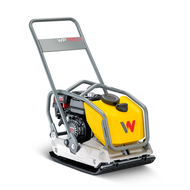
The Plate Compactor uses a heavy, flat base plate and relies on high-frequency, low-amplitude vibration to settle material. The weight of the machine combined with the vibration forces particles to shift and lock into place.
Best for Granular Soils and Open Areas
Plate Compactors excel when dealing with **granular soils** and projects that require high surface coverage.
- Granular Soil: These are free-draining soils like **sand, gravel, and crushed rock**. The vibration allows the different-sized particles to quickly rearrange themselves and settle into a dense, stable layer.
- Large, Flat Areas: Due to their wide plates and easy, walk-behind operation, they are the most efficient tool for prepping walkways, sidewalks, driveways, and parking lot sub-bases.
- Asphalt & Pavers: With the right accessories (like a paving pad), plate compactors are used for setting pavers and achieving a smooth finish on asphalt patches.
Types to Note:
- Forward Plate: Travels only in one direction. Best for open areas.
- Reversible Plate: Can travel forward and backward, offering better maneuverability for mid-sized jobs where turning space is limited.
The Final Decision: Rammer vs. Plate Compactor
To maximize efficiency, always match your machine to your soil type and space requirements. Here is a simplified checklist to help guide your purchase:
| Criteria | Tamping Rammer (Jumping Jack) | Vibratory Plate Compactor |
|---|---|---|
| Compaction Method | High-impact, vertical blows (Percussion) | High-frequency vibration and weight |
| Ideal Soil Type | Cohesive (Clay, Silt) and Mixed Soils | Granular (Sand, Gravel, Crushed Stone) |
| Application Area | Narrow Trenches, Poles, Foundations, Walls | Large Open Areas, Driveways, Sidewalks |
| Compaction Depth | Deeper (Can handle thicker lifts) | Shallower (Best for surface leveling) |
The truth is, many professional contractors own both. While a plate compactor speeds up work on a large sub-base, the rammer is essential for the trenching and backfill work around the edges. When you have the right tool, you eliminate costly re-work and ensure the structural integrity of your build.
Shop our full line of Compaction Equipment including Rammers and Plate Compactors today!